Program
TRAIL RUNNING CULTURE (10%)
History of trail running, athletes, its ecosystem, and stakeholders.
Data and studies on the trail running market.
ANATOMY AND BIOMECHANICS OF THE FOOT IN TRAIL RUNNING (20%)
Basic knowledge: anatomy, foot type, dimensions, analysis.
Foot analysis.
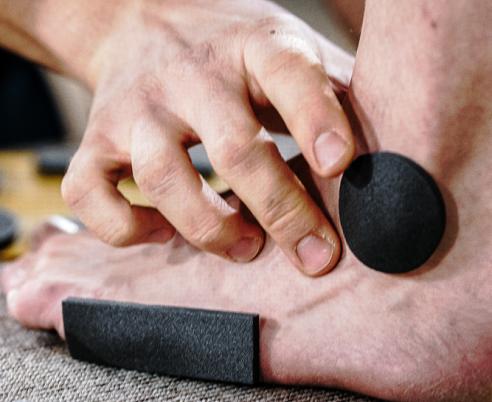
Foot preparation and protection for trail and ultra-trail running.
TRAIL RUNNER PROFILES AND STRIDE FACTORS (30%)
Explanation of the various factors affecting stride in trail running.
Different trail runner profiles: ground-contact / air-contact.
The relationship between shoe recommendations and types of runners.
COMFORT SOLUTIONS (20%)
Trail shoe construction and market overview.
Technical insights into comfort solutions: insoles, socks, and accessories.
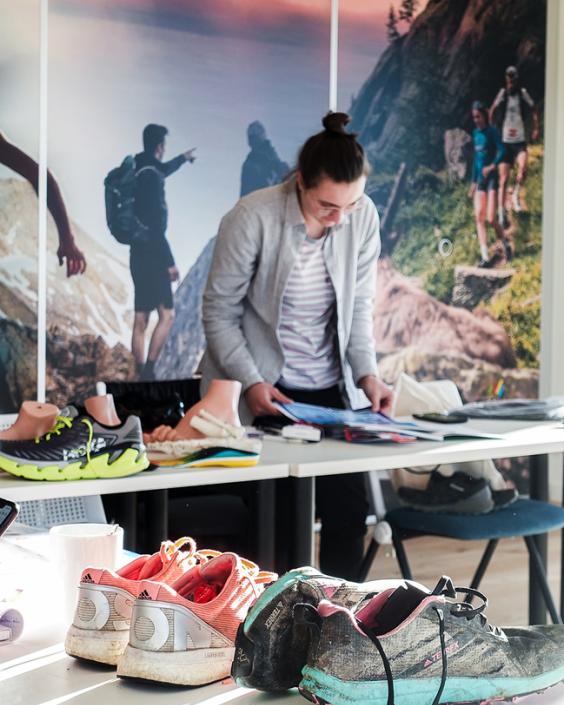
PRACTICAL WORKSHOPS (20%)
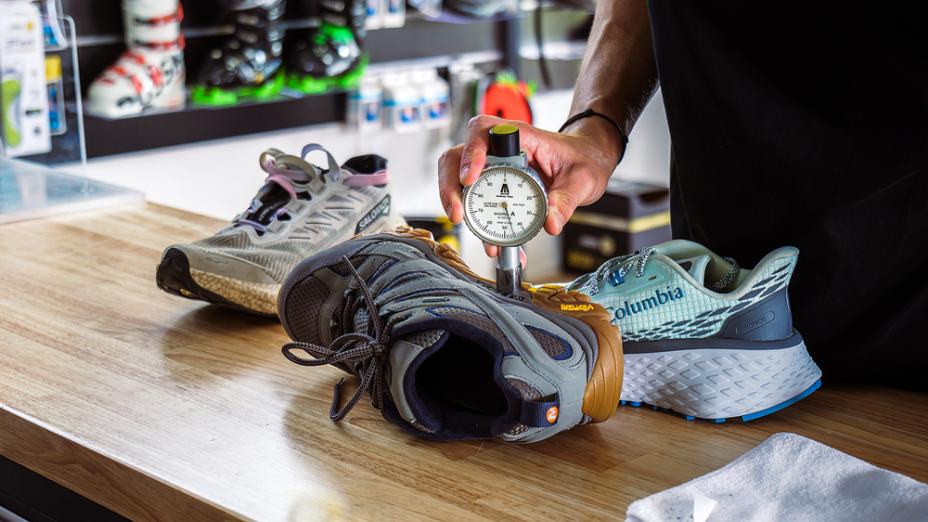
Learning to use foot analysis tools (mechanical or digital) through hands-on exercises.
Real-world stride analysis.
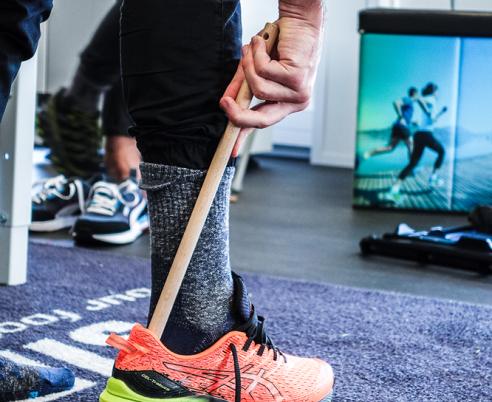
Learning lacing techniques.
Cutting and customizing insoles.
Learning Objectives
- Understand the biomechanics of the foot, its anatomy, and common issues.
- Understand common injuries and ailments among runners.
- Discuss the various factors that influence a runner’s stride.
- Be able to identify a trail runner’s balance profiles and movement preferences.
- Understand the construction of a trail running shoe, the different foot volumes, and the characteristics of brands on the market.
- Be able to carry out the steps involved in selling a shoe and address the customer’s needs in order to offer appropriate comfort solutions.
- Perform specific lacing techniques, customize pre-molded insoles, correct shoe deformities, and conduct shoe fitting.
- Understand the construction and benefits of technical trail running socks.
Prerequisites
- Offer a selection of pre-molded insoles in-store
- Have a measuring tool (mechanical or digital)
- Have already completed the Running Orange training